Norway
Billy Elliot, Norway and a PhD thesis: the unexpected journey of a UBS PhD studentGoing abroad whilst studying for a PhD is not just about discovering another university or expanding one’s academic network. For Jeanne Lemarié, a PhD student in Management sciences at IAE Bretagne Sud and a member of the LEGO research group, a week spent at the University of Inland Norway in Lillehammer also provided an opportunity to take a fresh look at her own research journey.
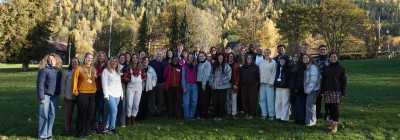
From 5 to 9 October 2026, she took part in the Blended Intensive Programme (BIP) ‘Research Dissemination in the Digital Age’, organised within the framework of the European EMERGE alliance. Her initial aim was to learn on how to communicate her research on gender stereotypes and career choices more effectively. But this mobility experience ultimately gave her so much more.
A desire for international exposure
Like many young researchers, Jeanne Lemarié wanted to discover different academic practices and understand how research is conducted outside France. The programme’s theme, focusing on the dissemination of research in the digital age, resonated particularly strongly with her own background, as she had already had the opportunity to present her work to the general public.
Encouraged by two PhD students from her laboratory who had taken part in a previous edition held in A Coruña, Spain, she decided to apply. Her ambitions at the time were manifold: to hone her skills in science communication, to produce reusable material to present her thesis, to practise her English in an academic context, and to develop a European network of PhD students.
A campus surrounded by nature and a different approach to teaching
On her arrival in Lillehammer, the PhD student was struck by the campus’s natural setting. But it was the Norwegian approach to teaching that particularly caught her attention. Lecturers do not hesitate to share their own experiences – both their successes and their failures – as well as more personal aspects of their own journeys.
This way of teaching ties in with one of the programme’s central messages: behind every research topic lies a personal story. Over the course of the week, Jeanne Lemarié discovered a concept that would stay with her for a long time: ‘me-search’. This term, used by another PhD student, refers to the autobiographical element that often fuels researchers’ questions.
When Billy Elliot sheds light on a thesis
For Jeanne, this idea came as a revelation. Her research focuses on how time pressure can lead young people to make career choices that conform to gender stereotypes. Whilst this topic is underpinned by scientific data and academic research, she realises that it is also rooted in her personal history.
The film “Billy Elliot” has been with her since childhood. Even then, she saw it as the story of a young boy grappling with social expectations and gender stereotypes. As she reflected on her journey through the BIP programme, she came to understand that this long-standing fascination had significantly shaped her academic interests. What she had previously regarded as a personal matter to be kept at arm’s length thus became a valuable resource for explaining her research to a wider audience.
Learning to present your research in a different way
One of the programme’s key exercises involved producing a three-minute digital narrative presenting her research work. This project led the PhD student to completely rethink the way she communicates. Whilst an initial version still resembled a condensed scientific article, discussions with the tutors and other participants encouraged her to place her personal experience more at the heart of the narrative.
Through collaborative workshops, peer feedback sessions amongst PhD students and the use of narrative tools such as the ‘dramatic arc’, she learnt to construct a story capable of conveying both scientific knowledge and a human dimension.
This approach helped her to better understand that making research accessible to a wider audience does not mean diluting the scientific content but rather making ideas more accessible without compromising their rigour.
A profoundly European experience
Beyond the academic learning, the mobility programme was characterised by the people met. Nearly 35 PhD students from various universities within the EMERGE alliance and from a wide range of disciplines took part in this week of exchanges. This diversity enriched the discussions and strengthened the sense of belonging to a European scientific community.
The excursion to the Evenstad campus, which specialises in forestry and the study of large predators, as well as cultural explorations in Lillehammer and Oslo, also contributed to this immersive experience.
This experience particularly resonated with the vision of the EMERGE alliance, which aims to ‘place the peripheries at the heart of Europe’. Hailing from Brittany, Jeanne Lemarié was struck by this emphasis on peripheral regions and by the idea that Europe is also being built far from the major cities.
Communicating to take action
At the end of this mobility programme, the PhD student returned home with practical tools, a reusable digital narrative and new ambitions. She now wishes to develop science outreach initiatives aimed at sixth-formers and young people, whilst also raising awareness of her research amongst public decision-makers.
More broadly, this week in Norway has reinforced a strong conviction: communication should not be regarded as a secondary activity for researchers. For her, producing knowledge only makes sense if it can subsequently be understood, discussed and utilised by society.
As she herself puts it, this break from her usual deadlines has given her something particularly valuable: time to pause, rethink and look at her research in a different light.
- Faculty of Law and Political Science
Faculty of Law and Political ScienceCampus Vannes · 02 97 01 26 00 - Faculty of Arts, Humanities and Social Sciences
Faculty of Arts, Humanities and Social SciencesCampus Lorient · 02 97 87 29 29 - Faculty of Sciences and Engineering Sciences
Faculty of Sciences and Engineering SciencesCampus Lorient · 02 97 88 05 50
Campus Vannes · 02 97 01 70 70 - School of Engineering
School of EngineeringCampus Lorient · 02 97 88 05 59
Campus Vannes · 02 97 01 72 73 - Lorient and Pontivy Institute of Technology
Lorient and Pontivy Institute of TechnologyCampus Lorient · 02 97 87 28 00
Campus Pontivy · 02 97 27 67 70 - Vannes Institute of Technology
Vannes Institute of TechnologyCampus Vannes-Kercado · 02 97 62 64 64 - IAE Bretagne Sud
IAE Bretagne SudCampus Vannes · 02 97 01 26 05
 Lorient Campus27 rue Armand Guillemot
CS 7030, 56321 LORIENT Cedex Pontivy CampusAllée des Pommiers
56300 Pontivy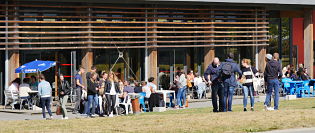 Vannes CampusRue André Lwoff
CS 60573, 56017 VANNES Cedex