Shivam, post doc under the Marie Skłodowska-Curie Actions (MSCA) fellowship programme
Shivam, post doc under the Marie Skłodowska-Curie Actions (MSCA) fellowship programmeShivam Pande, an Indian researcher specialising in geoinformatics and artificial intelligence, obtained his PhD from the Indian Institute of Technology Bombay in 2023. His current research, carried out as part of a Marie Skłodowska-Curie Actions (MSCA) fellowship at the University of South Brittany (UBS), focuses on the use of deep learning models applied to 3D data and point clouds for forest mapping. His research focuses in particular on tree species detection, biomass estimation and the characterisation of forest structure, thereby contributing to the preservation of ecosystems and the fight against climate change within the framework of the European Green Deal.
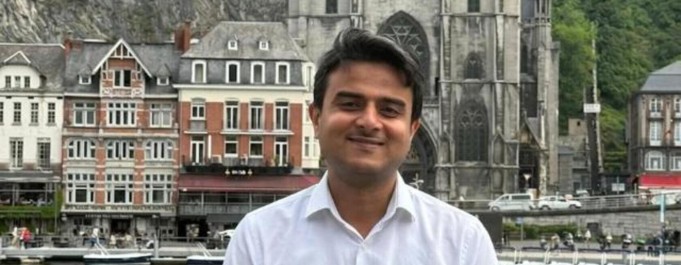
I am Shivam Pande. I am a researcher from India. I received my PhD in Geoinformatics from Indian Institute of Technology Bombay, India, in 2023, where I worked on analysing hyperspectral images using artificial intelligence and deep learning techniques for land use/land cover classification.
Marie Curie Research Work:
In my current MSCA postodctoral research, I am working with point clouds data in the domain of forest mapping. The research focusses on developing scalable deep learning models for the applications including but not limited to tree species detection, biomass and forests structure estimation, and tree crown delineation. The research is aimed at forest preservation, thus contributing positively against combating climate change and aligns with the vision of European Green Deal.
How did you first learn about UBS?
I attended a lecture from Prof. Sébastien Lefèvre on 17 June 2022, while pursuing internship in TU Munich. Later I contacted him and had an opportunity to work as a post doctoral researcher in the IRISA lab in UBS Vannes from 1 Dec 2023 to 30 Nov 2024 on weakly labelled semantic segmentation of high resolution remote sensing images. During the same time, we jointly wrote the Marie Cure postdoctoral proposal, with Prof. Minh-Tan Pham as my other co-supervisor in the project.
Recommendation to prospective MSCA applicants:
1. The proposal should lie at intersection of the expertise of the post-doc researcher and the host institution/supervisor. The abilities and skills of the supervisor and the host should complement to those of the student.
2. The proposal should tackle an existing problem and should have an overarching impact on the society, ideally aligning with the visions of sustainability or combating a social issue.
3. The proposal should additionally highlight how would the research benefit them in their career growth and holistic development as a researcher as well as a better human being.
4. The prospective fellows should have regular meeting with supervisors, the counsellors from 2PE (https://2pe-bretagne.eu/en) , or any other organisation in their institute that specialises in providing guidance in writing European proposals.
Article by Sébastien Lefèvre – supervisor of Shivam Pande, Marie Skłodowska-Curie Actions (MSCA) postdoctoral fellow – DeepForMap
How did you come to know Shivam Pande?
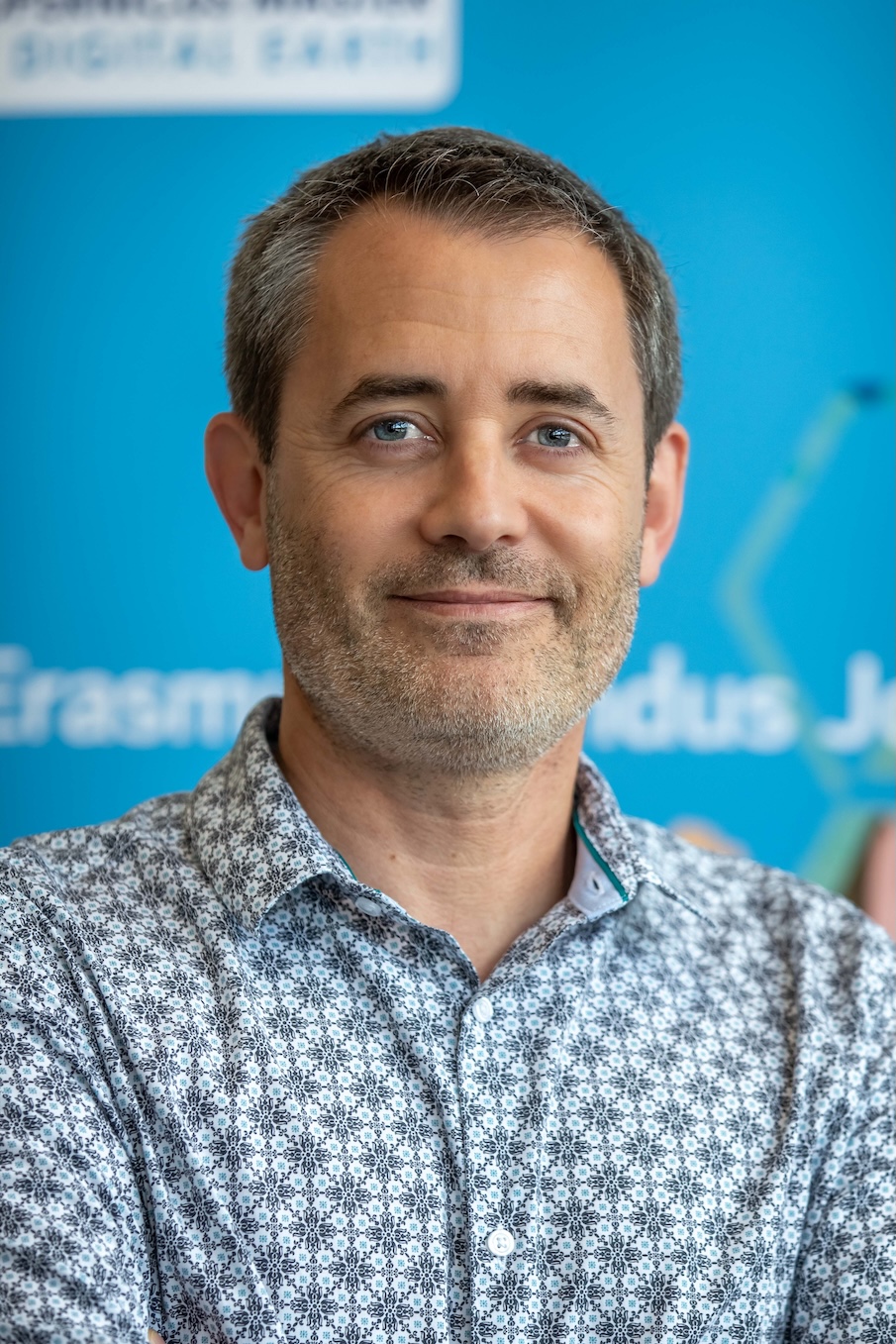 Shivam contacted me in February 2023, expressing interest in a postdoctoral position within our team. His doctoral research had already yielded some very compelling publications, so we decided to bring him on board for the ANR SIXP project, which aimed to map vegetation using drone-acquired imagery of former, polluted mining sites. The project was particularly challenging due to the extremely high resolution of the images — a few millimeters per pixel—compounded by significant measurement errors stemming from the limited precision of the GPS equipment used.
How did you work on drafting the DeepForMap project proposal?
I already had experience drafting MSCA proposals, having supervised submissions in 2015 and 2020 - though those were not selected, despite receiving high scores (81% and 76%). Fortunately, I later had the opportunity to serve as an evaluator for the program in 2023 (and again in 2025). This gave me a much better grasp of the selection criteria for this highly competitive call! A few months before his initial postdoctoral contract ended, Shivam and I decided to prepare a submission for the MSCA call. We discussed potential content, focusing on "hot" topics that were interesting both for our team and for him personally. The availability of point clouds covering all of France—provided by the IGN through the LiDAR-HD program—offered excellent opportunities from scientific, societal, and environmental perspectives, so choosing a topic was relatively straightforward. Furthermore, the support provided by the 2PE unit proved to be decisive.
What are the benefits for a supervisor and their laboratory in hosting an MSCA postdoctoral fellow?
First and foremost, there is the funding: it is substantial and covers not only the postdoc’s salary but also operational costs (computer, travel, publication fees, internship supervision, etc.) for a period of up to two years. Furthermore, institutional and management costs can be covered.
Furthermore, because it is a European project, it serves as a good example of the dynamism of the host team and enhances its visibility. It acts as an indicator that is highly valued both by supervisory bodies and by the evaluators who will assess future research proposals. It also helps in attracting new candidates...
What advice would you give to colleagues who might wish to supervise an MSCA postdoctoral fellow?
I would offer three key pieces of advice. First, try to gain experience as an evaluator; this provides a clear understanding of the selection criteria and how they are assessed. You should register in the expert database, taking care in selecting your keywords carefully. I was fortunate enough to be selected as an expert, and having an insider’s view of the system was crucial to the success of this project. Second, ensure you fully understand the eligibility rules—specifically the 12-month maximum period that a candidate may have already spent in France by the call’s closing date (often in early September). If you intend to recruit a postdoc before having them draft an MSCA proposal, their contract at UBS should ideally begin in mid-September or October. It is not always something one considers when planning to hire a postdoc for the first time: anticipating the drafting process and getting involved in writing the document—even though it is generally the candidate who actually writes it.
- Faculty of Law and Political Science
Faculty of Law and Political ScienceCampus Vannes · 02 97 01 26 00 - Faculty of Arts, Humanities and Social Sciences
Faculty of Arts, Humanities and Social SciencesCampus Lorient · 02 97 87 29 29 - Faculty of Sciences and Engineering Sciences
Faculty of Sciences and Engineering SciencesCampus Lorient · 02 97 88 05 50
Campus Vannes · 02 97 01 70 70 - School of Engineering
School of EngineeringCampus Lorient · 02 97 88 05 59
Campus Vannes · 02 97 01 72 73 - Lorient and Pontivy Institute of Technology
Lorient and Pontivy Institute of TechnologyCampus Lorient · 02 97 87 28 00
Campus Pontivy · 02 97 27 67 70 - Vannes Institute of Technology
Vannes Institute of TechnologyCampus Vannes-Kercado · 02 97 62 64 64 - IAE Bretagne Sud
IAE Bretagne SudCampus Vannes · 02 97 01 26 05
 Lorient Campus27 rue Armand Guillemot
CS 7030, 56321 LORIENT Cedex Pontivy CampusAllée des Pommiers
56300 Pontivy Vannes CampusRue André Lwoff
CS 60573, 56017 VANNES Cedex